

Music is poised to be a pivotal battleground in the fight over copyright and Fair Use. Recently, major music labels added stream ripping allegations to copyright lawsuits against AI music generation platforms Suno and Udio. I couldn’t help but notice that Andreessen Horowitz (a16z), the noble defenders of tech’s divine right to violate copyright, were early investors in Udio, one of the music-generating AI models that is currently in hot water.
Sony Music, UMG and Warner Records were already suing Suno and Udio for mass copyright infringement, but the charge added in September of 2025 isn’t a minor technicality. Stream ripping is a deliberate circumvention of encryption designed to protect copyrighted content and violates the Digital Millennium Copyright Act (DMCA). There is no “oops, that was an accident” defense. It’s so blatant.
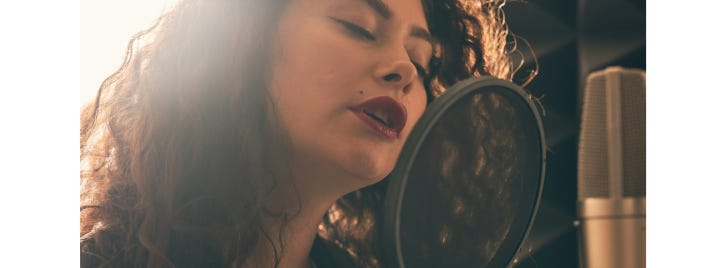
Founded in December 2023 by former Google DeepMind researchers David Ding, Conor Durkan, Charlie Nash, Yaroslav Ganin, and Andrew Sanchez, Udio positioned itself as a creative ally to musicians. That message seemed credible, especially with artists like will.i.am and Common joining as angel investors. Andreessen Horowitz led Udio’s $10 million seed round in April 2024. This is the same Andreessen Horowitz that led Substack’s Series A and joined its $100 million Series C round.
Udio’s public messaging is full of artist-first language:
“We are deeply committed to empowering artists and work alongside some of the most brilliant and creative artists in the music industry.”
But by June—just two months after launch—Udio was sued for allegedly training its models on copyrighted recordings without permission. And this wasn’t a vague “sounds like” accusation. Plaintiffs demonstrated Udio generating recognizable songs and artist voices—including The Temptations, Mariah Carey, and James Brown. That directly contradicts Udio’s own claim:
“We are completely uninterested in reproducing content in our training set… and have implemented state-of-the-art filters to ensure our model does not reproduce copyrighted works or artists’ voices.”
So where’s the disconnect?
Just months before the funding of Udio was announced, Andreessen Horowitz submitted a letter to the U.S. Copyright Office, “explaining” that training AI on copyrighted content is legal under Fair Use Doctrine and tracking down copyright owners and compensating them is too time-consuming and impractical. Compliance will cause the U.S. to lose its edge in the AI arms race and threatens national security. Not kidding. It’s hard to imagine that this ethos didn’t influence the decisions made by Udio to blatantly ignore copyright in training their model.
Here are some of the gems from the Andreessen Horowitz Letter.
“The only practical way generative AI models can exist is if they can be trained on an almost unimaginably massive amount of content, much of which… will be subject to copyright.”
Rather than pursue viable, legal alternatives—like licensed datasets, public domain archives, Creative Commons libraries, or even commissioning original music—they insist that Fair Use permits training on copyrighted material. While not all court rulings have favored content creators, judges have shown far less sympathy when the training data is pirated. Just ask Anthropic, which agreed to pay $1.5 billion to settle a copyright lawsuit over using books scraped from illegal databases.
“AI model training… does not exploit any protectable expression in any given work.”
Udio’s outputs are wholesale rip-offs of famous songs and even artists’ voices.
“AI models are not vast warehouses of copyrighted material, and any suggestion to this effect is a plain misunderstanding of the technology.”
It’s the classic “you just don’t get technology” defense. And while it’s true that AI models aren’t designed to store training data explicitly, music presents unique challenges compared to text: it’s shorter, more predictable, highly repetitive, and easier to overfit. Overfitting occurs when a model becomes so tightly tuned to its training data that it reproduces specific inputs—like an exact song—rather than learning broader patterns it can apply creatively to new situations. Big Tech likes to compare AI training to humans learning how to create or compose by studying other artists’ works, but that’s misleading—models don’t understand or interpret, they just find patterns in data.
Andreessen Horowitz omit a critical part of the equation: outputs. They pretend that once models are released to millions of users, prompting and inference don’t matter. But anyone building AI systems must account for how models are used—both the inputs and the results. If Udio can generate a track that mimics a hit song, the issue isn’t just whether training qualifies as Fair Use—it’s whether the outputs themselves are infringing. And increasingly, it’s clear that the training process is shaping those outputs in ways that matter legally and ethically.
They also claim that placing the burden of copyright compliance on AI developers will only benefit the largest tech companies. But the opposite is true. Many small startups are committed to ethically sourcing data. You can see a list of these companies at fairlytrained.org. It’s Big Tech that chooses to ignore copyright across the board.
My favorite part of the Andreessen Horowitz letter is the appeal to sympathy:
'“Over the last decade or more, there has been an enormous amount of investment—billions and billions of dollars—in the development of AI technologies, premised on an understanding that, under current copyright law, any copying necessary to extract statistical facts is permitted.”
Let’s all shed a tear for the billions spent on an assumption that might be wrong. Maybe they “just don’t get it”—that laws are subject to interpretation, and maybe they interpreted them wrong.
I wish I could’ve been in the room when Udio pitched Andreessen Horowitz. Even if they assumed immunity because of their inherent awesomeness, they had to understand the legal exposure. There’s no way training data wasn’t discussed. Did they give any consideration to licensing? Probably not—since they believe it’s “impossible,” even though other technologists have proven otherwise. Was the plan to scrape and ship because saying they support artists while doing the opposite is enough?
And what about those “special algorithms” Udio claims will protect artists? What exactly are they protecting artists from? Certainly not copyright infringement.
Special thanks to MrComputerScience for the inspiration to write this post. You can see his post here. And to Karen Smiley for her book, Everyday Ethical AI, which has already proven an invaluable resource for me and should be required reading for the staff of Andreessen Horowitz, all VCs, and anyone involved in AI from small startups to giant organizations developing tools and models.
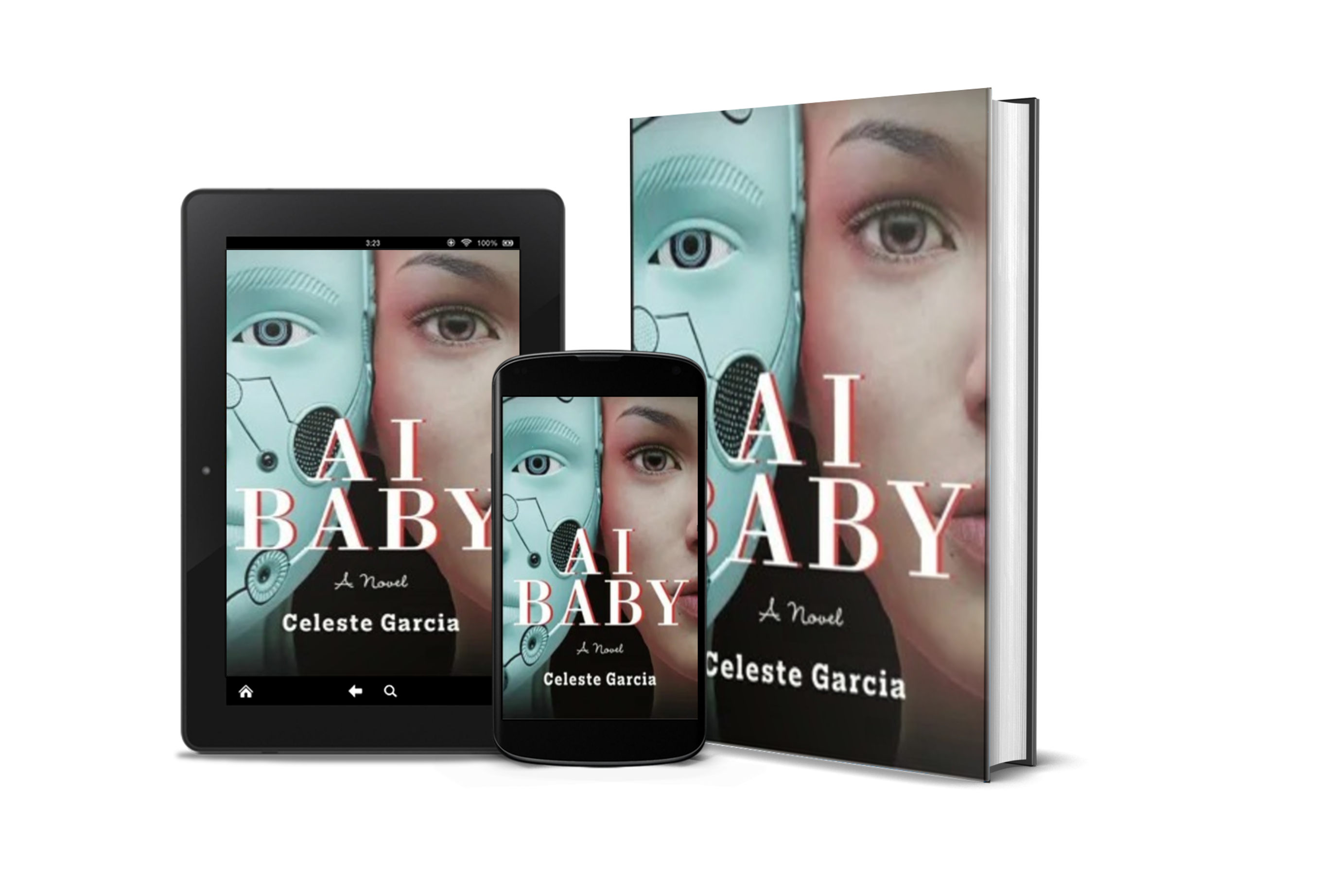
Coming Soon…AI BABY, the debut novel by Celeste Garcia
A satirical treatment of the AI apocalypse—when a “perfect” new girl arrives at an elite Seattle prep school and usurps Zoey’s soon‑to‑be valedictorian status, her mother Erica embarks on an unhinged search for truth that pulls her into the heart of an AI empire and a fight for her daughter’s soul.
BIBLIOGRAPHY:
Everyday Ethical AI: A Guide For Families & Small Businesses“ - by Karen Smiley
Udio AI Music Raises $10 Million, $6.5 Million For Spines AI, More Sora, Cinematic AI
Udio is a New AI Music Generation App that Rivals Suno with Powerful Creation Tools
How AI Firms Like OpenAI and Meta Are Stealing Music: Investigation
Marc Andreessen on AI copyright: So what about Muh Money?_Hawk Insight
Celeste!
I love your latest article.
(I'm beginning to realize that you have a wicked sense of humor. I like the phrase "The noble defenders of tech's divine right to violate copyright" as much as your product launch idea for Urine Luck.)
I admit that I'm totally ignorant of the venture capital side of things. I had only heard the name Andreessen Horowitz in passing, but I didn't realize they were such major players. Thanks for educating me on that front!
(I just noticed that a16z is on Substack. We should tag them here and request their feedback. Lol.)
The defense strategy of "Look, we had no choice but to use this copyrighted content..." is undoubtedly a bold positioning. It's not ethical or moral, of course, but from a purely legal standpoint, framing it as a competitive necessity issue is strategically wise. "If you don't let us steal content, we lose our edge. Your call!"
(It reminds me of something Saul Goodman would say.)
I also love the idea of Fairly Trained. THAT is the direction all AI should be headed. This whole topic reminds me of the Harvard Library Public Domain Corpus from December of last year. It's a massive database of one million digitized books that are 100% ethical, free, and legal to use for training any AI project.
Initiatives like THIS are what we should point to when others say all AI is inherently unethical. It doesn't have to be!
Thanks for the superb reporting, Celeste.
Also, I'm honored that you mentioned me. Nobody ever does that, lol.
I am now your superfan for life.
(Hope you don't get sick of me!)
Cordially,
Mike D
MrComputerScience
Thanks for continuing to ring the alarm over this. Frankly, I don't have much faith in VC investors to do the right thing except when it profits them. Profit at the detriment of the creative toil and investment artists of all verse, sounds and stripes. And unfortunately, that is beginning to seem inevitable here, as well, no matter how much we might wish things were otherwise.
Et tu, Substack?